

Our core mission has remained the same for a long time: to build a clean and safe living environment. In pursuing this mission, we have deliberately developed our expertise and, along the way, learned to design integrated solutions and develop products that meet our customers’ needs.
Increasingly, our deliveries are design-and-build solutions, drawing on existing, proven product platforms. The systems we deliver have long lifecycles, often 25 years or more. As a result, a significant part of our work takes place after the construction phase: operational support, modifications, extensions and modernisation. These managed services already account for around half of our workload.
Our field of operation remains the clean and safe living environment, but the ways in which we deliver it have become more diverse. At the heart of everything we do is the same guiding principle: we create a clean and safe living environment.
The past year has been one of significant financial growth for us. Traditionally, the completion of large projects has led to fluctuations in revenue. We have sought to smooth this variation by acquiring customers whose investment cycles do not align with one another. In practice, this has taken us to international markets, particularly in railway safety systems, traffic management systems and water utility automation. Our expertise in water processes has also opened doors to new applications. In food production, for example, closed-loop water circulation has become a necessity: nutrient management is critical both for production efficiency and for environmental protection.
Expanding into new areas is part of staying relevant. We believe that serving our customers successfully will ultimately be reflected in sustainable financial growth.
Regulation and its cost
Regulation is a central element of our operating environment. Regulation that supports better risk management and takes into account the environmental and societal impacts of operations is, in principle, welcome. Challenges arise when compliance becomes an end in itself. This can weaken competitiveness through inefficiency and through competition with those who choose not to comply. At the same time, regulation creates demand for our expertise and services when it applies to our customers. We hope that common sense and efficiency will prevail in regulation, and that we can contribute to building solutions for a clean and safe living environment, rather than merely fulfilling obligations.
The capabilities required by regulation often demand significant investment. For example, we began developing our information security management model five years ago, even though NIS2 requirements have only recently become applicable. Similarly, security-classified facilities and practices related to software lifecycle management have required long-term commitment. In sustainability reporting, we have followed the principles of the UN Global Compact for over ten years. As a result, we are well prepared when future regulation in this area becomes more clearly defined.
All of this relates to a fundamental question: what does the margin of our business cover, and why?
Risk management and strategic choices
Not all work related to risk management translates directly into customer value, but it is nevertheless essential. The alternative is often far more costly. Since 2022, we have had to prepare for exceptional uncertainty: a pan-European economic downturn and rapid shifts in public demand. Despite this, we have made conscious strategic choices. We have not moved towards dual-use solutions, but have remained focused on our core mission.
We believe that, regardless of circumstances, the need for a clean and safe living environment will endure. For that reason, there will always be a place for an operator like us.
Things work better together
In a process organisation, work is not based on a traditional line-management hierarchy. We operate simultaneously in multiple processes and projects. In expert work, few tasks are entirely familiar, and complex wholes are never fully owned by a single individual. Achieving results requires ownership and determination, but also genuine collaboration. For this reason, facilitation has become a key way of working for us over the past year. Facilitation means making collaboration easier: helping things move forward and enabling everyone to participate.
Understanding of neuropsychiatric traits has increased, which is a positive development. At the same time, it is important to remember that well-established leadership practices benefit everyone. Clear responsibilities, schedules, work instructions, onboarding and open, reasoned feedback make work more accessible across the organisation. Work accessibility – the ability to engage with work in a sensible and structured way – is one of the core responsibilities of leadership. When organisational and individual values are sufficiently aligned and work flows smoothly, individual challenges are alleviated. Each of us has our own neuropsychiatric traits, and all of us benefit from good leadership.
Self-management grows from openness
Self-management and isolated self-direction may sound similar, but they represent opposite ends of the spectrum. Self-management is open, inclusive and goal-oriented. It involves actively seeking feedback, sharing ownership and working together. Isolated self-direction, by contrast, means moving forward without support, sometimes even out of sight. For us, self-management means open dialogue and readily available support.
We provide a safe place to get things done together and openly.
author
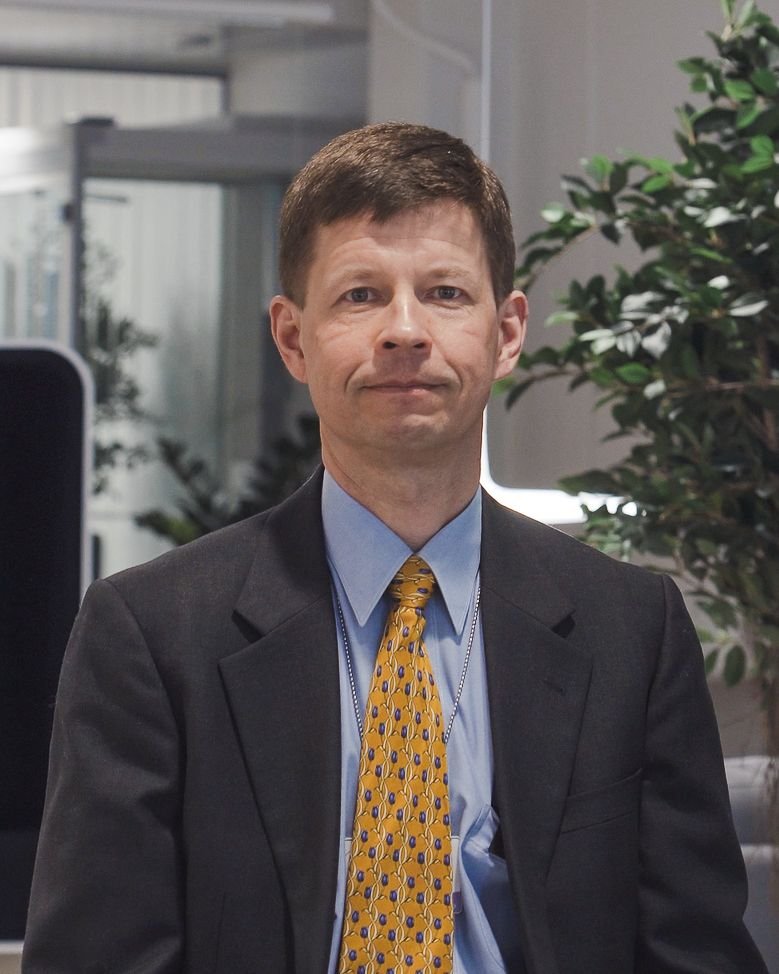
Anssi Laakkonen
Managing Director
Anssi’s experience in railways and industrial automation and control systems dates back to the 1980s. He has worked at Mipro since the beginning of the 2010s, most recently as the Managing Director from 2019. Participating in the social debate – and thereby the questions of the green transition and preparedness and continuity – have been part of his daily work with the chairmanship of Raidealan neuvottelukunta’s advisory board.